How to Choose Archery Lessons in Roseville, CA
By BowCraft Archery — November 18, 2026

A practical Roseville buyer's checklist for archery lessons near me: instructor certification, range safety, class size, age fit, commute, and what to ask before you book.
If you live in Roseville, Rocklin, Granite Bay, or Folsom and you've been typing "archery lessons near me Roseville CA" into your phone, you're probably one decision away from booking—and one bad pick away from wasting a Saturday. The short answer: choose a provider that can prove instructor certification, describe its range safety rules in writing, cap beginner class sizes, fit your archer's age, and sit within a reasonable Placer County commute. Verify all five before you pay a deposit.
This guide is the checklist version of that answer. It's written for a Sacramento-area parent or adult beginner who is ready to book and just needs to know what to ask. Work through the steps in order; each one filters out a category of provider you don't want.
If you want to skip the vetting and start with a program that already publishes its safety and class details, you can book your Roseville archery lesson today and confirm the specifics with the instructor before your first session.
Key takeaways
- Ask for the instructor's certification name and the certifying body, not just "certified." USA Archery is the national governing body, and its Instructor and Coach levels are the common standard.
- Get the range safety rules in writing before you arrive—whistle commands, waiting line, and how equipment is inspected.
- Beginner classes should be small enough that the instructor can watch every archer shoot. Ask for the actual ratio, not "small groups."
- Match the program to the archer's age and draw weight. A 7-year-old and a 14-year-old rarely belong in the same lesson.
- For Roseville, Granite Bay, and Folsom families, 20–30 minutes of drive time is the practical ceiling. Beyond that, you'll skip weeks.
Step 1: Decide what you actually need before you compare anyone
Before you call a single provider, write down four things: the archer's age, their experience level, the bow style they want to learn, and how far you're willing to drive each week. "Archery lessons" covers everything from a first-timer's safety class to competitive coaching, and providers price and staff those very differently.
Be honest about the bow style question. Recurve is the Olympic-style bow you see in youth programs; compound uses pulleys (cams) and a let-off that makes it easier to hold at full draw. Most beginner programs start everyone on recurve because it teaches form, then move interested students to compound. If a provider can't tell you which style they teach beginners, that's your first red flag.
Also decide the format: a one-time intro session, a multi-week course, or private coaching. A Sacramento archery lessons page or a Granite Bay program usually spells out which formats exist, which saves you a phone call.
The worked example: two Roseville families, same Saturday
Take two families in the same Roseville neighborhood. Family A books the closest option—a 10-minute drive—without asking anything. Family B spends 15 minutes on the phone and confirms certification, a 1:8 instructor ratio, a written safety briefing, and an age-appropriate youth class. Family B's lesson is slightly farther away but the archer actually gets coached. Family A's kid spends 40 minutes sharing one instructor with 22 other people and quits by week three. The phone call is the whole difference.
Step 2: Ask who is teaching—and what "certified" actually means
Ask directly: "Who is teaching my lesson, and what certification do they hold?" A real certification has a name, a level, and a governing body behind it. In the U.S., USA Archery is the national governing body for the sport, and it runs a formal Instructor and Coach certification ladder. "Certified" with no name attached means nothing.
Follow up with three questions:
- Is the certification current? Certifications expire or require renewal. Ask when it was last updated.
- Is there a background check? For any youth program, a background check through a recognized screening process should be standard. Ask.
- What's the instructor's competition or coaching background? Not mandatory, but useful context—especially for a teen aiming at competitive shooting.
You'll also want to know whether the same instructor teaches every week or rotates. Consistency matters more for beginners, because form corrections build on each other.
The mistake most buyers make here
They ask "are you certified?" and accept "yes." That's a yes/no question with a yes/no answer. Ask which certification instead, and the provider will either name it or change the subject. Both are useful information.
Step 3: Get the range safety practices in writing
Say this out loud: "Can you email me your range safety rules before our first lesson?" A qualified provider has this ready and will send it without hesitation.
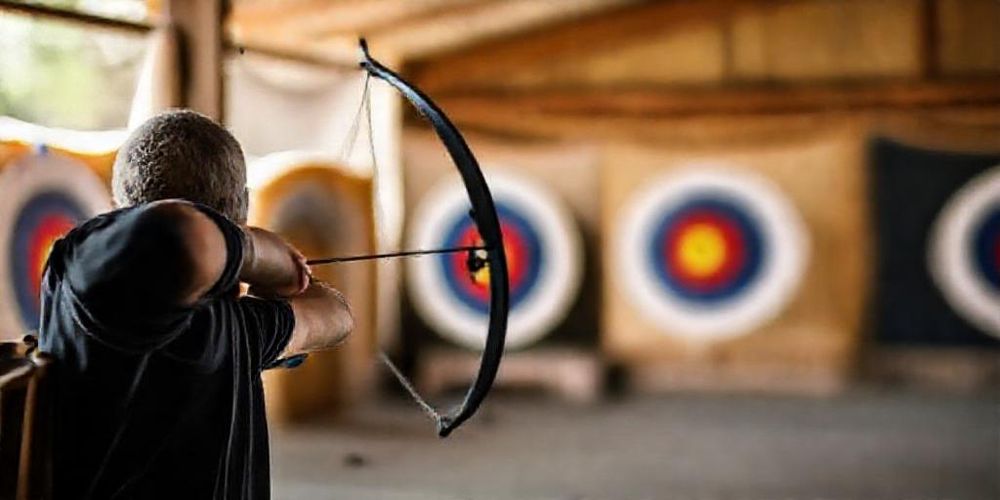
Range safety is the set of rules that govern how people shoot together—when bows are drawn, when anyone walks downrange, and how equipment is checked. The standard structure most ranges follow includes:
- A waiting line behind the shooting line, so nobody is behind a drawn bow.
- Whistle or verbal commands for "commence shooting" and "cease shooting."
- Bows unstrung or arrows nocked only on command, not whenever the archer feels like it.
- Equipment inspection before each session—checking strings for fraying, nocks for cracks, and arrow shafts for damage.
- A backstop rated for the bows in use, and a clear rule about never drawing a bow except toward it.
This isn't bureaucracy; a cracked arrow or a bow drawn behind the line is how injuries happen. The National Safety Council maintains general injury-prevention guidance, but archery-specific rules come from the certifying body and the range's own written policy—ask for the range's.
Objection to handle up front: "Isn't this overkill for a kids' class?" No. Youth lessons are exactly where safety discipline gets taught, because that's when habits form. A provider who treats safety as paperwork is telling you something about how they run the line.
If you've compared enough providers and one has already answered these questions well, you don't need to keep shopping—book your Roseville archery lesson today and ask the remaining questions in your confirmation email.
Step 4: Nail down class sizes, age fit, and what a lesson actually includes
Here's the question that separates a lesson from a crowd: "What's the instructor-to-archer ratio in a beginner class?" Ask for a number. Under about 10 students per instructor is a reasonable benchmark for beginners; larger groups can work but usually mean less individual coaching per archer.
Then match the program to the age. Youth archery typically splits into age bands (often roughly 6–8, 9–12, and teens, though this varies by provider), and the draw weight of the equipment should match the archer. A provider that puts a small 7-year-old on a bow built for a teenager is managing a group, not teaching one. Ask whether youth equipment is sized by draw weight and whether the instructor adjusts it per archer.
Use this comparison table when you call around. Write the answers in the blank column.
What to ask: Which certification, and current? — Why it matters: Proves real instruction training — Provider A: — Provider B:
What to ask: Safety rules sent in writing? — Why it matters: Shows a documented safety culture — Provider A: — Provider B:
What to ask: Students per instructor? — Why it matters: Determines how much coaching each archer gets — Provider A: — Provider B:
What to ask: Age bands and equipment sizing? — Why it matters: Prevents injury and frustration — Provider A: — Provider B:
What to ask: Drive time from your Roseville address? — Why it matters: Predicts whether you'll actually keep attending — Provider A: — Provider B:
What to ask: What's included (bow, arrows, arm guard, targets)? — Why it matters: Affects total cost and hassle — Provider A: — Provider B:
What to ask: Cancellation and make-up policy? — Why it matters: Protects your money — Provider A: — Provider B:
What's included, what to bring
Most reputable beginner programs provide the bow, arrows, arm guard, finger protection, target, and a safety orientation. That's the baseline—if you have to buy equipment before your first lesson, ask why.
What you should bring:
- Closed-toe shoes and clothes that won't catch on a bowstring.
- Hair tied back and loose jewelry removed.
- Water and sun protection for outdoor ranges—Roseville summers are hot, and most instruction happens outdoors.
- A signed waiver. Providers typically require one for minors; ask whether it's handled online before arrival, because that's a sign of an organized operation.
A short "what's provided" list on a provider's booking page is worth more than a friendly phone manner. It tells you they've done this enough to systematize it.
Step 5: Do the commute math for Roseville, Granite Bay, and Folsom
Put your address and the range's address into a maps app during the time of day you'd actually drive, and add 10 minutes. That's your real weekly cost. From central Roseville, most of Placer County's archery options sit within roughly 15–30 minutes; Folsom and Granite Bay families should check the Route 65 and I-80 patterns on a weekday evening before committing to a weekday class.
Distance matters more than beginners expect. A 45-minute drive each way turns a one-hour lesson into a three-hour commitment, and that's the single most common reason families drop out by week three. A closer program with a slightly higher fee usually wins on total cost once you count gas and missed weeks.
Location also affects logistics: does the provider teach indoors (year-round, weather-proof) or outdoors (better for real-world conditions, but Roseville's summer heat and winter rain matter)? If you're comparing a Rocklin option against a Folsom one, check each program's own Rocklin and Folsom pages for scheduling and location details rather than relying on a general listing.
The step most buyers skip
They compare price per lesson instead of cost per hour of actual coaching. Divide the lesson fee by the number of students per instructor. A $30 class with 20 students is far more expensive per unit of attention than a $45 class with eight. Run that division before you decide anything.
Step 6: Confirm pricing, policies, and paperwork before you pay
Ask for the total cost, the cancellation policy, and whether waivers are completed online. Pricing should be published or sent in writing—not "call us." The same goes for make-up classes if you miss a week due to illness or weather.
Red flags that should end the conversation:
- No written safety policy, or reluctance to share it.
- No named certification or background check for youth instruction.
- A refusal to state class sizes.
- Waivers handed out at the door with no advance signature option.
- Pricing that changes depending on how you ask.
Once you've confirmed the six items above, book. The BowCraft pricing page will show you current rates and formats so you can compare against whatever else you've collected. One more thing: ask whether you can observe a lesson before enrolling your child. Good providers say yes.
Here's the scoring tool, filled in with an illustrative pair of providers so you can see how the checklist works. It's an example, not real data—score your own candidates the same way, one point per confirmed item.
A provider that scores four or five out of five is a safe booking. Anything below three means you're taking a chance on safety or on your own follow-through.
Ready to stop comparing and start shooting? Book your Roseville archery lesson today and bring this checklist to your first session—the instructor should be able to confirm every line.
FAQ
How do I verify an archery instructor's certification?
Ask for the certification name and the certifying body, then check it against USA Archery's published instructor and coach listings. If the provider can't name the organization, treat the claim as unverified. Certification levels differ, so ask which level applies to your class.
What should I expect at my first archery lesson in Roseville?
Expect a safety briefing, equipment fitting, and a lot of form work at short distance—most beginners don't shoot far on day one. Bring closed-toe shoes and expect to sign a waiver, ideally online before you arrive. Ask about class size when you book.
Are archery lessons safe for kids?
Yes, when the range has documented safety rules, age-appropriate equipment, and an instructor who can watch every archer. Ask for the student-to-instructor ratio and whether background checks are standard for youth staff. Safety discipline is taught from lesson one, not added later.
How many lessons does it take to get decent at archery?
There's no fixed number—it depends on the bow style, how often you practice, and what "decent" means to you. Most beginners see consistent grouping within a multi-week course, but progress varies. Ask a provider what a typical intro course covers before you commit to a longer package.
Is recurve or compound better for a first-time archer?
Most beginner programs start students on recurve because it builds form fundamentals, then transition to compound if the archer wants the mechanical advantage of cams and let-off. Ask which style the provider teaches beginners and whether they offer both. Neither is "wrong"—the fit depends on the archer's goals.
What if I have to miss a lesson?
Ask about the make-up policy before you pay. Policies vary widely—some providers allow make-ups within a session, others don't. Get the answer in writing along with the cancellation terms so you know what your money covers.