Charter School Archery Programs in California
By BowCraft Archery — November 22, 2026

How California charter schools can add archery enrichment: safety standards, waivers, insurance, mobile setup, group sizing, and what to ask a provider before booking.
How to Start a Charter School Archery Program in California: A Step-by-Step Guide for Sacramento-Area Schools
Yes, a California charter school can run an archery enrichment program, and the simplest route for most Sacramento-area schools is to book a mobile provider who brings certified, background-checked instructors, insurance, and all equipment to your campus or a nearby park. You handle permission slips and site approval; the vendor handles bows, targets, safety briefings, and instruction.
If you're an administrator or parent enrichment coordinator in Roseville, Sacramento, or anywhere in Placer County, this guide walks you through running a charter school archery program in California in the order you'll actually do it, from the first site question to the signed contract. Each step names the forms, agencies, and provider answers that matter, so you can vet a vendor on safety, insurance, and cost without guessing.
BowCraft Archery operates inside Denio's Farmers Market in Roseville and also offers mobile classes; ask when you book where and how classes are run. BowCraft describes itself as an archery training facility focused on safe instruction and a good experience for your students; ask what the program includes when you book.
Key takeaways
- California charter schools can host archery as enrichment because it is a supervised instructional activity, not a competitive CIF sport, but your authorizer's site-approval and insurance requirements still come first.
- Most K–12 archery programs use the National Archery in the Schools Program (NASP) or USA Archery safety standards; ask any provider which standard they follow and how they document it.
- Insured, background-checked mobile providers remove most of your setup burden: generally you provide a space, a signed waiver, and a schedule, and they bring everything else.
- Get a written quote that states group size limits, gear included, travel fees, and the certificate of insurance naming your school.
Before you start gathering documents, request a quote so you know the realistic per-student cost and what space the provider needs. You can Request a charter school archery program quote and use the reply to fill in your budget worksheet.
What do you need before starting a charter school archery program in California?
You need four things before booking: approval from your charter authorizer or principal, your school's certificate-of-insurance requirements, a suitable indoor or outdoor space, and a permission-slip and waiver process approved by your administration. Gather these first; they determine which providers can even be considered.
Site approval and facility use
Charter schools in California operate under a charter petition authorized by a district or county board, and many also lease facilities or use a district site. Before you promise students archery, confirm in writing that your authorizer or facility host allows it. A multipurpose room, cafeteria, or gym works for a standard 10-yard indoor range with a proper backstop; an adjacent park or field works for larger groups.
Insurance requirements
Ask your business office for the minimum general liability limits and whether the provider must be named as an additional insured on the certificate of insurance (COI). Request the COI early — it's the most common source of last-minute delays. California does not publish one blanket archery insurance limit for schools; limits are set by your school, your authorizer, and sometimes your facility landlord, so confirm the number rather than assume one.
Space and scheduling
Confirm ceiling height, floor space, and whether the space is free during your target window. Indoor archery lets you run regardless of weather, which matters for spring and fall scheduling in the Sacramento Valley.
Which safety standards and waivers apply to school archery in California?
A school archery program should follow a published curriculum standard such as NASP or USA Archery, use range rules enforced by a certified instructor, and collect a signed waiver and parental permission slip before any student handles a bow. California school-system safety guidance, including the California Department of Education, is a reasonable place to check general student-safety expectations.
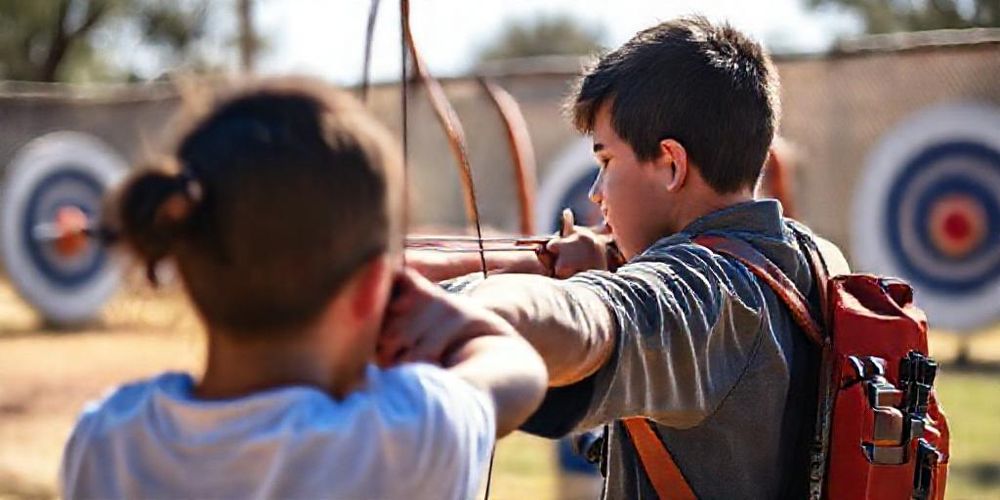
Safety standards to ask about by name
- NASP: a school-focused archery curriculum with a standard equipment set, range commands, and instructor training.
- USA Archery: the national governing body, with instructor certification levels and a published range safety guidance document.
Ask which standard the provider follows, what certification their instructors hold, and whether they carry a written range-safety plan. Archery safety for kids and beginners covers what a safe beginner range looks like.
Waiver and permission-slip process
A waiver is a signed acknowledgment of risk; a permission slip is your school's parental-consent form. Most vendors supply their own waiver, and your school adds its permission slip and emergency-contact form. Plan for one signature cycle: send forms at least one to two weeks before the session so you're not chasing signatures on the morning of the event. Many districts prefer online waivers, but confirm your school's policy on electronic signatures.
Background checks
Ask whether every instructor who will be on campus has passed a background check, and whether the provider will share documentation. Ask the provider directly to confirm the certification and background-check details, and ask your business office what documentation it needs before booking.
Should you book an indoor range visit or a mobile program at your school?
Book mobile if you need whole-grade participation with no busing; book a Roseville range visit if you want a short field trip and can arrange transportation. Both remove the equipment burden from your campus, and the choice usually comes down to group size and schedule.
Factor: Space — Mobile at your school or park: You provide gym, multipurpose room, or field — Range visit in Roseville: Provided by the range
Factor: Busing — Mobile at your school or park: Not required — Range visit in Roseville: You arrange transportation
Factor: Weather — Mobile at your school or park: Indoor space solves it — Range visit in Roseville: Indoor
Factor: Best group size — Mobile at your school or park: Whole classes or grade levels — Range visit in Roseville: Smaller groups per trip
Factor: Setup effort — Mobile at your school or park: Vendor handles setup and teardown — Range visit in Roseville: None for you
Factor: Good fit for — Mobile at your school or park: Enrichment blocks, large celebrations — Range visit in Roseville: Field trips, smaller cohorts
Whichever you choose, ask about group sizing. A typical mobile session runs one instructor per lane and works best when students rotate in small shooting groups while others wait at a safe distance. Confirm what maximum class size the provider can safely run and whether they'll split into rotations — this is the single most common setup problem at school events.
Sacramento-area schools often use an outdoor park for large events because it allows more shooting lanes and bigger groups than a campus gym. Placer County campuses in Roseville, Rocklin, and Granite Bay usually have workable indoor space for standard classes plus nearby park access for spring celebrations. Mobile providers handle travel, so ask whether travel fees apply by distance — your quote should state this plainly.
For an idea of what a well-run school program looks like, see our schools program page and the details of mobile archery for setup requirements. The budget below shows how a typical mobile program stacks up; the figures are illustrative, not real BowCraft pricing, so use them to organize questions rather than to set your total.
When you're ready to compare costs against your enrichment budget, Request a charter school archery program quote with your student count and preferred dates, and ask for the quote to itemize instructor time, gear, and any travel fee.
What should a school archery program include — and what should it not?
A school program should include certified, background-checked instructors, insurance with a COI, all bows, arrows, targets, and safety gear, a waiver and permission-slip process, and clear group-size limits. It should not include a sales pitch for equipment, uninsured volunteers running the line, or "beginner" sessions with no range commands or backstop.
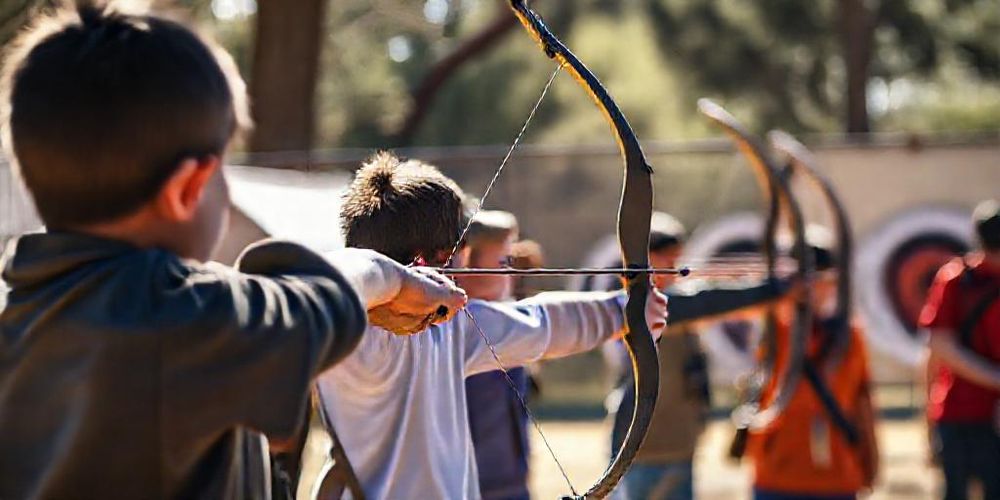
What's included / what's provided
Included by a good provider: Certified, background-checked instructors — Provided by your school: Site approval and room booking — Red flags to avoid: Uninsured volunteers on the shooting line
Included by a good provider: Bows, arrows, targets, backstops, safety gear sized for students — Provided by your school: Permission slips and waivers — Red flags to avoid: No written range-safety plan
Included by a good provider: General liability insurance and COI — Provided by your school: Student supervision between rotations — Red flags to avoid: Pressure to buy equipment after the session
Included by a good provider: Range setup, teardown, and safety briefing — Provided by your school: A quiet, confirmed schedule window — Red flags to avoid: No stated group-size limit
Included by a good provider: Adapted instruction for students with special needs — Provided by your school: Communication with families — Red flags to avoid: No instructor certifications stated
Ask what the program includes when you book — including whether any equipment is sold or available for purchase — so a lessons-focused provider's scope is clear before your students arrive. Ask any provider directly how they adapt instruction for students with mobility, sensory, or attention needs.
What questions should you ask a provider before booking?
Ask for certifications, background-check documentation, insurance limits, the certificate of insurance naming your school, group-size limits, travel fees, equipment included, waiver process, and a written safety plan. Request everything in writing — a provider who answers these quickly is usually the one your business office will approve.
- Which safety standard do you follow (NASP, USA Archery, or another), and what instructor certifications do you hold?
- Are all on-campus instructors background-checked, and can you share documentation?
- What are your insurance limits, and will you send a COI naming our school as additional insured?
- What maximum group size can you safely run, and how do you rotate students?
- Is all equipment included and sized for our age range?
- Do you charge travel fees for our campus or preferred park, and what's the cancellation policy?
- Do you have your own waiver, and how does it pair with our permission slip?
- How do you adapt instruction for students with special needs?
- Can you share references from charter schools or district programs you've served?
Use the answers to build a one-page comparison. If you want a baseline on what to expect from beginner instruction generally, the guide to choosing archery lessons in Roseville covers the same vetting criteria for individual lessons.
The goal is a vendor your business office approves without a second round of questions. When the list is answered and you're ready to lock a date, Request a charter school archery program quote and include your student count, age range, preferred dates, and whether you want campus mobile or a Roseville range visit.
FAQ
Do charter schools in California need special approval to offer archery?
There is no separate state archery license for schools, but you must follow your charter authorizer's and facility host's site-approval rules, your own insurance requirements, and your school's permission-slip policy. Check with your authorizer and business office before booking, because charter conditions and lease terms vary by school.
Is archery safe for elementary-age students?
Yes, when it's run under a published standard like NASP with certified instructors, a backstop, and enforced range commands. Ask any provider how students are supervised between turns and what equipment they use for younger ages.
Can archery run indoors at our school?
Yes. A multipurpose room or gym with adequate height and a proper backstop works for a standard indoor range, and it solves weather problems that outdoor-only providers can't. Confirm the space with your facilities office and ask the provider for their minimum space requirements.
Who supplies the equipment?
A good mobile or range-based provider supplies all bows, arrows, targets, safety gear, and backstops, which is the main reason to book a training facility rather than buy equipment. You shouldn't need to purchase anything, and a lessons-focused provider won't try to sell you gear.
How far ahead should we book?
Plan one to two weeks for signature cycles and COI delivery, and more if you need board or authorizer approval. If you're coordinating a whole-grade celebration, ask about date availability early and set a deadline for returned waivers.
Do you serve charter schools outside the greater Sacramento area?
Ask BowCraft which cities and areas it serves, including Roseville, Sacramento, Rocklin, Granite Bay, and Folsom, and confirm whether your campus is within their service area when you book. If your campus isn't covered, ask for a referral or look for a NASP or USA Archery provider near you.
Ready to build your program? Request a charter school archery program quote today and get a written, itemized answer you can take straight to your business office.